
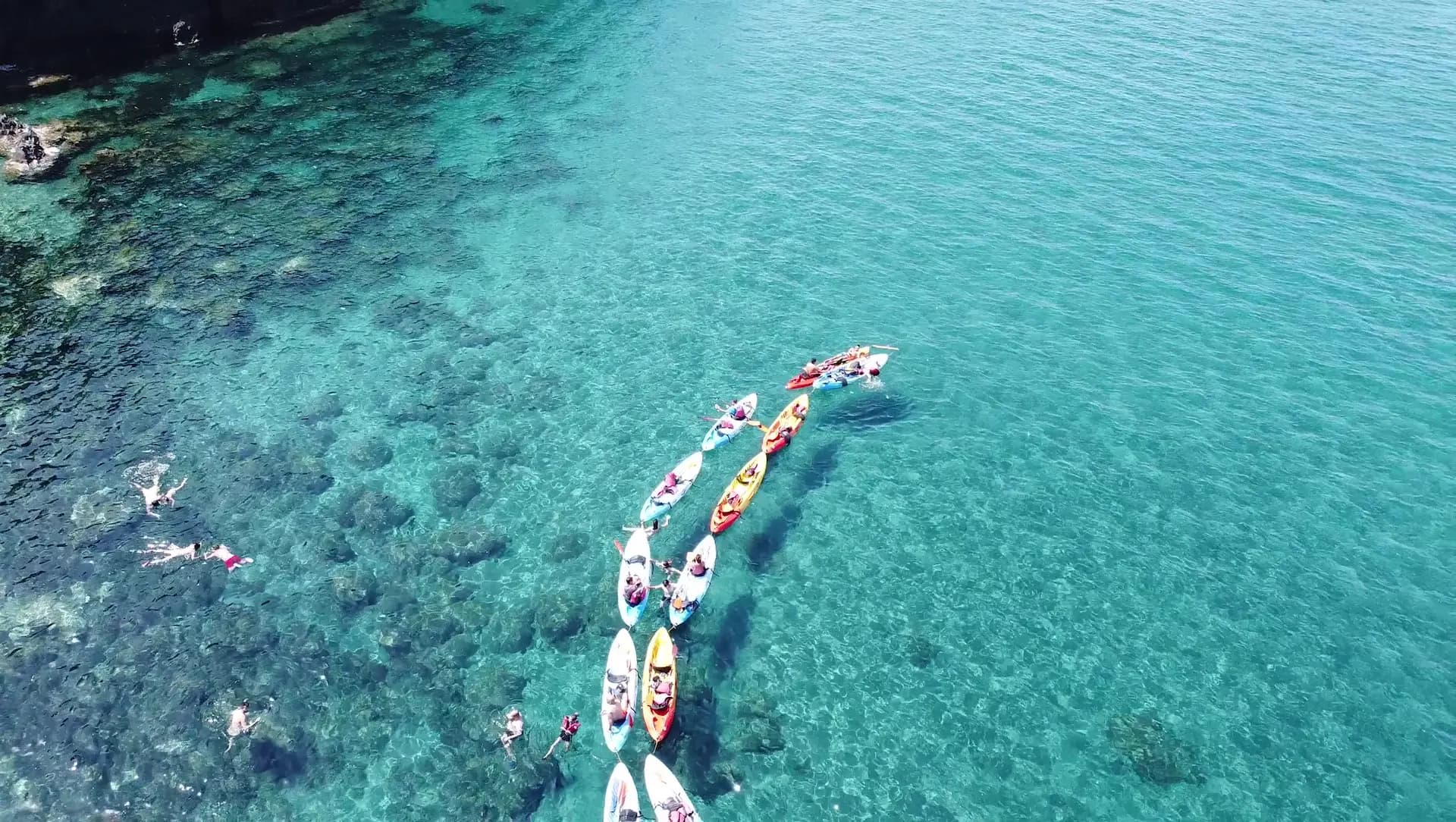
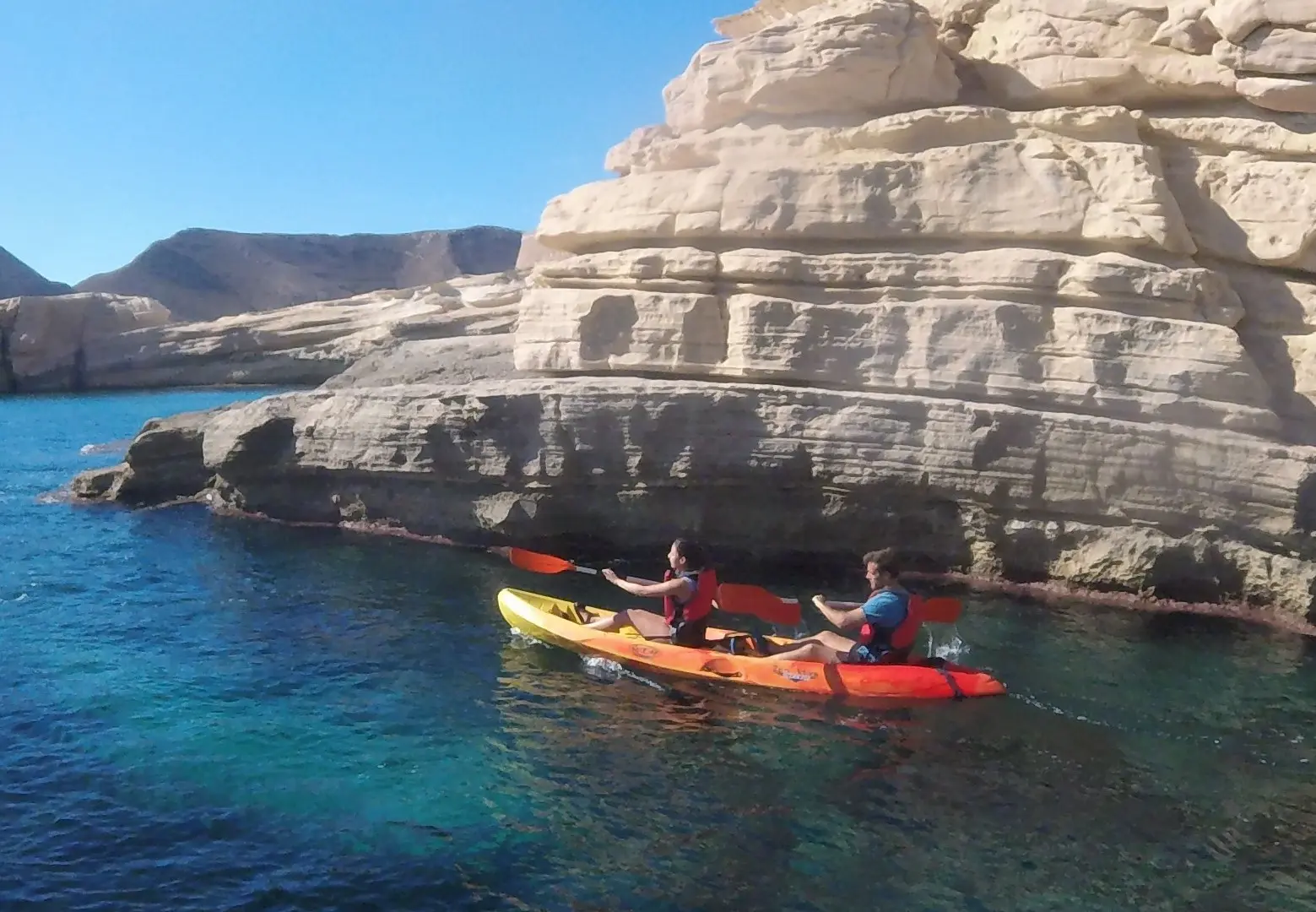
The Cabo de Gata-Níjar Natural Park hides among its volcanic cliffs some of the most spectacular corners in the Mediterranean. And the best way to discover them is by kayak: silent, eco-friendly and capable of reaching places no motorboat can enter. Here are the best coves in Cabo de Gata to explore by kayak, organised by zone so you can plan your perfect route.
Why kayak is the best way to explore the coves of Cabo de Gata
Most of the park's most spectacular coves are inaccessible by land, or only reachable after long hikes on rough tracks. A kayak changes the rules: from the water you can approach sea caves, hidden beaches between cliffs and volcanic formations that most visitors will never see.
The silence is another of its great assets. Without a motor, you become an invisible observer of the ecosystem. Octopuses appear from the rocks, fish swim below the hull and cormorants rest on the cliffs without fleeing. This direct contact with untouched nature is simply unbeatable.

Best coves from Las Negras
Las Negras village is the ideal launching point for the northern section of the park. Its waters are generally calmer than those at the southern tip, making it an excellent base for both beginners and experienced kayakers.
1. Cala de Enmedio
Hidden between Las Negras and La Isleta del Moro, Cala de Enmedio is one of the jewels of the Almería coast. Land access exists but requires more than an hour's walk on rough terrain; by kayak, you arrive in 25–30 minutes from Las Negras. The contrast between turquoise water, white sand and black volcanic cliffs creates one of the most photogenic landscapes in all of Andalucía. Marine visibility here can reach 20–25 metres — bring your snorkelling gear.
2. La Cueva del Negro (The Black Cave)
Not a conventional cove but a sea cave at the base of the volcanic cliffs, accessible only from the water. Inside, when the sea is calm, sunlight creates blue reflections on the volcanic rock walls. The walls are covered in sponges and bryozoans, and octopuses lurk in the crevices. A place no ordinary travel guide will tell you about.
3. Playa del Peñón Blanco
Just minutes from the cave, this small beach of black and white pebbles is named after a large white limestone boulder — a fascinating geological contrast with the surrounding black volcanic cliffs. Just five minutes by kayak from Las Negras, its waters are crystal clear and it is almost always deserted even in August.
Coves of the Arrecife de las Sirenas area
4. Arrecife de las Sirenas (Mermaid's Reef)
The most iconic geological formation in Cabo de Gata: a solidified lava reef emerging from the sea at the cape's tip, flanked by the 19th-century Faro de Cabo de Gata lighthouse. Snorkelling here ranks among the best in the European Mediterranean: sea anemones, fan mussels, sea urchins, lobsters and extraordinary fish diversity. Dolphin sightings are frequent, especially between May and October.
5. Los Escullos and Cala del Delfín
The 18th-century Castillo de San Felipe presides over the volcanic-sand beach at Los Escullos. The rocky reefs to the north are a snorkelling highlight. Nearby Cala del Delfín — named for the dolphins that frequent the area — is a perfect mid-route snorkel stop with exceptionally clear water and fine sand.
Coves for experienced kayakers
6. Los Genoveses
Many consider this the most beautiful beach in Andalucía. Road access is restricted to protect it; the kayak approach from La Isleta del Moro passes over exceptional marine habitats before arriving at a beach of fine sand with pale turquoise water and complete silence.
7. Cala del Plomo
This remote cove at the northern edge of the park is accessible only by sea or after a long inland hike. Deep blue water, rich rocky seabed and extraordinary solitude await experienced kayakers willing to make the journey.
Practical tips for exploring coves by kayak
Check the wind forecast. The Levante (east wind) can rise within hours in Cabo de Gata. Morning is generally the calmest time. Use biodegradable sunscreen — it is mandatory in the Natural Park. Go with a guide if you are a beginner: local guides know every current, every cave and every spot where dolphins tend to appear.
Tags: